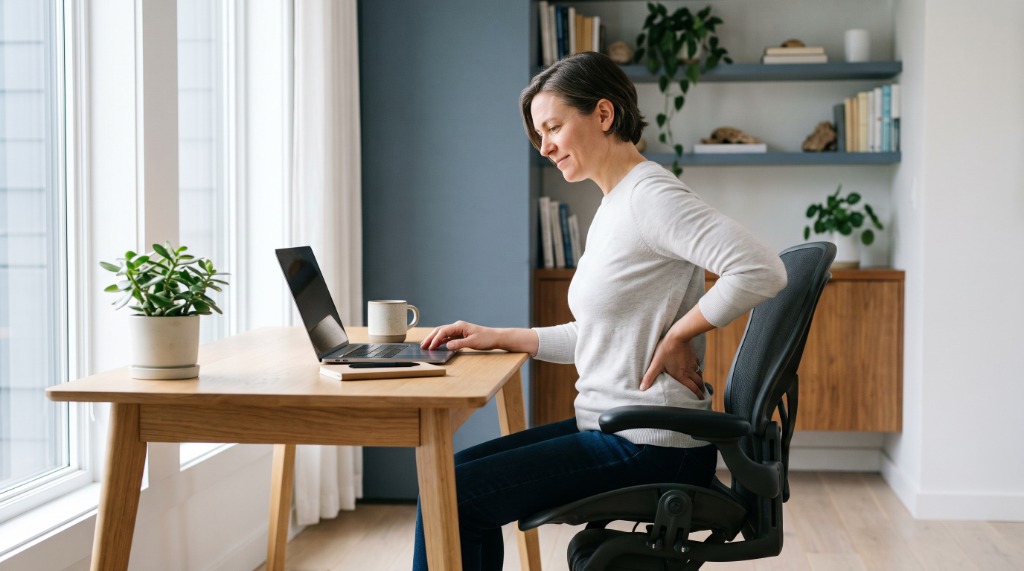
You stand up after an hour at your laptop and feel that familiar grab in your low back, hips, or neck. So you blame the chair, promise to stretch more, and keep working. But if you keep asking what causes pain after sitting and the problem keeps coming back, the real answer is usually bigger than furniture.
That matters if you work remotely, travel often, or spend long stretches in front of a screen. When pain shows up after sitting, it is not just an inconvenience. It is often your first obvious sign that your body is losing control of tension, circulation, joint mechanics, and recovery. The chair may trigger it. The deeper imbalance is what keeps it repeating.
What causes pain after sitting for so long?
Most people are given a shallow explanation. They are told sitting makes muscles tight, posture gets bad, and the back gets stressed. That is partly true. It is just not complete enough to explain why one person can sit for two hours and feel fine while another stands up stiff, foggy, and drained every single day.
Pain after sitting usually builds from a combination of mechanical compression, reduced movement variability, and a body-control problem. In plain English, your joints and soft tissues are not just being loaded. They are being loaded by a system that may already be compensating.
That is why generic advice often disappoints. You buy lumbar support. You raise the monitor. You switch desks. You might get short-term relief, but the pattern returns because the body is still organizing tension the same way.
The chair is rarely the whole story
A bad chair can absolutely make symptoms worse. So can poor desk height, unsupported feet, or a laptop setup that forces your head forward. But blaming equipment alone misses the pattern many remote workers live with.
If your pain shows up after flights, after coworking sessions, after long calls, and even sometimes after relaxing on a couch, the common denominator is not one chair. It is the way your body responds to stillness, stress, and load.
This is where a more precise model matters. In the Concept Therapy view, symptoms are not random events happening in isolation. They reflect imbalances in the body’s control system across different biological zones. That means your low back pain may not start only in the low back. Your neck tension may not be just a neck problem. Your hip tightness may be part of a larger compensation pattern.
Why sitting exposes hidden imbalances
Sitting is a stress test. It removes movement, fixes the pelvis in one position, reduces pumping action through the legs and trunk, and asks the spine to stabilize for long periods. If your system is already off balance, sitting reveals it fast.
When that happens, a few things tend to stack up at once. The pelvis can tilt and lock. The rib cage can stiffen. The head can drift forward. Muscles that should share work stop cooperating, so smaller areas take overload. Blood and lymph flow become less dynamic. Breathing gets shallower. Mental focus often drops right along with physical comfort.
That is why pain after sitting often comes with more than pain. Many people also notice heavy legs, poor concentration, mid-afternoon fatigue, irritability, or sleep that feels oddly unrefreshing. Those are clues that the issue is broader than posture alone.
Common pain patterns and what they usually mean
Low back pain after sitting is the classic complaint, but it is not always caused the same way. Sometimes the lumbar spine is compressed because the pelvis is stuck in a tucked position. Sometimes the problem is above it, with a rigid mid-back forcing the low back to absorb too much stress. Sometimes the hips are the real bottleneck, creating tension that dumps into the spine when you stand.
Hip pain or deep glute tightness after sitting often points to poor pelvic mechanics and reduced circulation through the lower chain. If you also feel stiff when you first walk, your body may be struggling to transition out of a fixed seated pattern.
Neck and upper back pain after sitting usually reflect more than screen height. Yes, head position matters. But chronic tension there often tracks with breathing mechanics, rib restriction, and a nervous system that is staying too switched on for too long.
Even tailbone discomfort or hamstring tightness can be part of the same story. The exact symptom location matters less than the repeated pattern: you sit, the body locks into one strategy, and pain appears when the system can no longer distribute stress well.
What causes pain after sitting even with good posture?
This is the frustrating part for high-functioning people. You try to sit upright. You use the ergonomic setup. You buy the standing desk. Yet the pain keeps showing up.
Good posture is helpful, but posture is not a permanent position you hold with effort. It is an output of how well your body is balancing itself. If you have to force "good posture," you are often just layering tension over an existing imbalance.
That is why disciplined people still struggle. They are trying to fix a control-system problem with conscious positioning. It works for a few minutes, then the old pattern returns because the body has not actually changed how it organizes load.
For remote workers and digital nomads, this gets amplified by travel, inconsistent sleep, dehydration, stress, and makeshift workstations. The body is not just sitting too much. It is sitting while under-recovered.
Why stretching alone often fails
Stretching can feel good. It can reduce the sensation of tightness for a while. But tightness is not always the core problem. Often it is the body’s protective response to instability or poor coordination elsewhere.
So if you keep stretching your hip flexors, hamstrings, or low back and the pain keeps returning, that does not mean you need more stretching. It may mean those tissues are reacting to a deeper pattern that has not been identified.
This is where people lose months. They chase the symptom site. They foam roll what feels tight, massage what hurts, and buy another gadget. Meanwhile the real imbalance keeps driving the same compensation loop.
A better way to think about pain after sitting
Instead of asking, "What exercise fixes this spot?" ask, "What system imbalance is making sitting expose this weakness every day?"
That shift matters. It moves you away from random trial and error and toward diagnosis. If your primary issue is in one biological zone, the right corrective work may look very different than what another person with the same symptom needs.
Two people can both have low back pain after sitting. One may need work that changes pelvic control and lower-chain mechanics. The other may need to address upper-body restriction, breathing pattern, and neurological stress. Same symptom, different driver.
That is the precision most wellness advice skips. It treats pain as a local event instead of a mapped pattern.
What to do next if you keep hurting after sitting
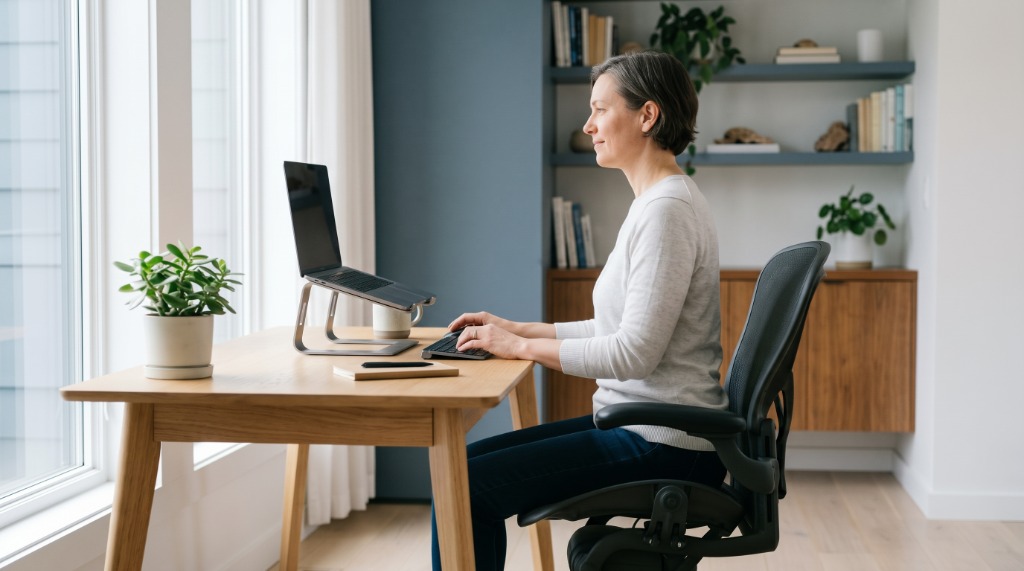
Start by stopping the blame cycle. Yes, optimize your setup. Put your feet flat, raise the screen, and break up long sitting blocks. Those are smart moves. But if pain keeps returning, do not mistake symptom management for an answer.
You need a structured way to identify the dominant imbalance behind the pain. That is where an assessment beats guesswork. A real symptom audit should connect pain after sitting with your energy patterns, sleep quality, digestion, mental clarity, and movement responses. That full picture tells you far more than posture photos ever will.
The Zone System Health Portal is built around that logic. Instead of telling everyone to sit straighter, it helps identify which zone imbalance is most likely driving the pattern so corrective exercises can match the cause more closely.
If your pain is occasional and mild, simple movement breaks and better workstation habits may be enough. If it is recurring, spreading, or tied to fatigue and brain fog, it is time to stop treating it like a minor desk problem.
Pain after sitting is often the body asking for precision, not another generic fix. Listen to that early, and you give yourself a much better chance of getting your comfort, energy, and work capacity back before the pattern gets harder to unwind.
Frequently Asked Questions
Why does my lower back hurt after sitting at a desk all day?
Lower back pain after sitting usually comes from staying in one static position for too long—not just from a bad chair. Prolonged stillness, unsupported feet, a low monitor, and gradual slumping shift extra load onto your lumbar spine. Regular movement breaks and a balanced workstation setup help interrupt that pattern.
How should I set up my chair and desk to reduce lower back pain?
Arrange your workstation as a single system rather than separate pieces. Keep both feet flat on the floor or a footrest, slide your hips back against gentle lumbar support, pull your keyboard and mouse close so your elbows stay near your sides, and place the top third of your monitor near eye level.
How often should I take movement breaks during the workday?
Short, frequent breaks work better than waiting until your back feels stiff. Both OSHA and NIOSH recommend varying tasks and changing positions throughout the day. Stand during phone calls, walk to refill your water, or take a two- to five-minute walking reset between meetings to let your muscles recover.
When should I see a doctor for lower back pain from sitting?
Consult a qualified healthcare professional if your lower back pain is severe, persistent, worsening, or follows an injury. Prompt medical evaluation is also important if discomfort is paired with pain traveling down the leg, numbness, tingling, new weakness, loss of balance, fever, night pain, or bladder or bowel changes.
Educational Disclaimer: This article is authored by Dr. Chris Bowe, D.C. for educational and biomechanical wellness purposes only. It is not intended as medical advice or formal surgical diagnosis. Always consult a licensed healthcare practitioner regarding persistent pain or health conditions.
Dr. Chris Bowe, D.C.
Licensed DCDoctor of Chiropractic • Founder of DeskReliefNow
Dr. Chris Bowe is a licensed Doctor of Chiropractic with over two decades of clinical experience in spinal biomechanics, neurophysiology, and posture correction for remote professionals.